Boron in oil and gas production
The modern oil and gas industry operates in complex environments rife with technical challenges. Projects can be remote. You’re drilling deviated wells longer and deeper than ever before, which means dealing with hotter temperatures.
You must invest in better oil-well fluids, leverage enhanced oil recovery (EOR) techniques, and use fluid additives, such as borates, that enhance performance.
Because of their unique properties, you can use borates across your production lifecycle to improve operations and support key infrastructure. Borates are commonly used to:
Control cement setting rates (retardants)
Cross-link polymers
Inhibit corrosion
Create pH buffering
As with any additive, quality, consistency, and solubility rates are important. Our team can provide technical support to help you overcome operational challenges.


Borates in drilling and exploration
Borates provide better control over materials and improve performance of key fluids
Drilling fluids
In drilling fluids, or “muds,” borates:
Enhance the performance of some polymer-based fluid-loss additives
Improve lubrication properties
Provide greater pH control of water-based muds
Inhibit corrosion to surrounding metal materials (steel tubing, casing, and pipework)
Cross-link viscosity-modifying polymers in water-based muds (deviated or horizontal wells)
Stabilize shale in reservoir formation by synergistically working with salts (such as potassium chloride) or mono- and oligosaccharides
Lost circulation treatments
Fractures in reservoir rock formations during oil drilling can quickly turn disastrous, resulting in severe loss of expensive drilling fluids. Lost circulation pills made with soluble borates can rapidly repair the problem by plugging fractures. Borates enhance the gelation of these polymer-gel-based pills through cross-linking capabilities.
Non-damaging completion fluids
Trace amounts of soluble borates act as bridging agents, preventing the inflow of fluid contaminants into the reservoir. Once well-completion operations cease, borates dissolve cleanly.
Pulsed-neutron well logging
If you use pulsed-neutron logging to better understand your reservoir, borates can help enhance the contrast between water and oil or rock zones.
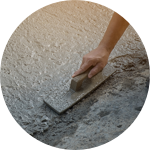
Borates adsorb into the surfaces of cement grains, reacting with the available calcium ions to form calcium borate coatings that are a barrier to grain hydration and cement setting.
Borates in hydraulic fracturing
If your oil and gas operations use hydraulic fracturing to increase permeability and improve fluid flow through the reservoir, borates can help with both fluid gelation and breakdown.
Fluid gelation
Under extremely high shear conditions, boron’s cross-linking properties help prevent gels from being irreversibly degraded. Because borates are water soluble, the gels that they form are easier to clean up than alternatives such as zirconates or titanates.
Fluid breakdown
Perborate makes fracturing operations clean-up easier by breaking down polymer chains. The breaker particles can be coated to delay release of the perborate, which can be made more water soluble by blending with polyols. Borate cross-linked fluids clean up better than those that employ other cross-linkers.

Borates in enhanced oil recovery (EOR) techniques
As primary production slows, maximizing the value of your oil well and extraction operations may involve secondary and EOR techniques. Borates are found in two common types of flooding—water and alkaline.
Neobor® and borax decahydrate for EOR
Strong pH buffering capacity and pH consistency over a wide concentration range means better EOR performance.

Water-flooding
Borates improve efficiency and oil recovery in two water-flooding processes: Slow-release systems and thermal precipitation. A slow-release system based on borate glasses and borate esters can be used to control viscosity via cross linking and viscosity-delay mechanisms. In thermal precipitation, a hot, nearly saturated borate solution can help block pores when it’s pumped into a reservoir’s high-permeability zones.
Alkaline flooding
For reservoirs containing water with very high salinity and hardness ions, borates can substitute or partially replace existing alkalis in EOR processes such as alkali-polymer and alkali-surfactant-polymer flooding.
Borates can be used in combination with other surfactants and polymers to achieve ultra-low oil/water interfacial tensions
Why work with U.S. Borax for your oil and gas application?
Reliable product performance, technical expertise, and superior quality make us the preferred choice for borates.

Unmatched consistency and quality
Any additives used in your operations must be reliable and consistent. Our high-quality borates possess low impurity levels and consistent granulometry, resulting in dependable performance.
Proven technical expertise
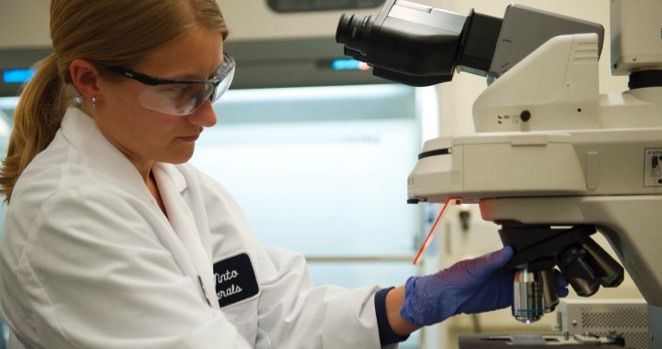
Our technical team can help you get the right borate concentration and solubility level for your specific needs. As a global leader in refined borates, we have an extensive knowledge base to apply for your use case.